Tuesday, June 22, 2010

Are Smartphones Making Us Dumber?


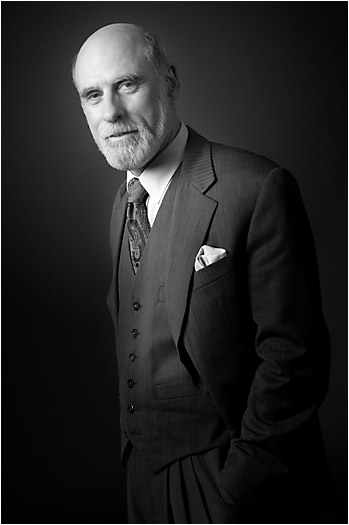
In January Vint Cerf (AKA "The Father Of The Internet") answered some questions from the Californian folk who watched his keynote.

One of the questions raised (and the mantra of most tech un-savvy parents) is the idea that "Smartphones and the internet are actually making people dumber". It's a compelling argument that having a 3 billion page encyclopedia at our fingertips means we no longer have to store any facts in our head, and subsequently, pub trivia is now a dying experience.

(That said, if hard drive space has taught us anything these last ten years, it's that we can always fill empty space with something).

Vint's answer was the need to teach more critical thinking, and on this point I think we all agree. People who blindly follow Google Map directions onto footpath-free expressways or charge into the wilderness with an iPhone for navigation are the horror stories of the information age (THIS is what I'm talking about).

If the spamming culture of social media has taught us anything it's that critical thinking is a prerequisite to avoid failing Natural Selection 101. We will always have people who like the easy path of being told what to do. All the rest of us can do is highlight these mistakes to enlighten those people about to repeat them, and to also provide a good giggle for those who put critical thinking in the realm of "common sense".

I think the generations of the future will be aware, even more so than those today, that it doesn't matter if you have every answer at your fingertips, you still need to be able to ask the right questions.

You can see an extract of the Vint Cerf's presentation HERE or find the whole interview at www.fora.tv.

What Makes A "Social Media Expert"?

Interesting article in today's SMH on the topic of Social Media Experts (Read it HERE).

As brands and businesses start to see the amazing power of social media (or more correctly, "social markets") the role for a Social Media expert to slip in between HR and Accounting seems like a likely future for companies keen to please their shareholders who probably engage in social media daily. Having a dedicated social media department might become th competitive advantage some businesses need to get an edge over the competition.

But how do you find a social media expert? What is it that gives someone the right to hold that title?

With Facebook taking over Google last month as the most visited site on the internet, it's clear "social media" is the new "search"... And companies need only glance at Googles market value to see how important it is to be a player in the social media game.

Personally I think understanding that social media is essentially a new way of delivering mass media through conversations and communities (that subtle difference between "telling" and "talking"). It's about tapping into people's wants and engaging with not only current consumers, but the people around consumers. Essentially (from a business perspective) it's about fostering a desire to re-communicate a core message amongst people and businesses that matter to you.

Ian Lurie at Conversation Marketing outlines some great questions (and comedic reactions) CEO's should ask any potential "expert" in social media to find out if they're worthy of the title (read that article HERE).

For me, I think trying to couple the term "expert" to a field of knowledge that is in such a constant state of evolution, development and expansion seems futile. Anyone with experience in social media is free to advise on their experiences, but if there's ever an expert way to analyse, strategise and implement social media campaigns then we can be sure the human race is dead and the world is being run by robots.

Thursday, June 17, 2010

New Radical Love Clip

Here's the latest clip I directed and produced with the absurdly talented Anthony MacFarlane. Currently in the seeding phase we'll wait and see how far this clip can go.

Also, if you pay close attention, you might just see some familiar faces waiting for the bus :)

Check it out:

Ernest Ellis - 'Want For Anything' from Radical Love/Dew Process on Vimeo.

Friday, June 4, 2010

Expressing Loyalty In The Online Community


I read an interesting article at YouAreNotSoSmart.com last month and have been meaning to share it's insights for a few weeks now. It attempts to dissect the behaviour of online communities, forums and blogs to become so heated and aggressive in their opinions in digital conversation. We see lines being drawn constantly between Brand Lovers ("fanboys") and Brand Haters ("hostages") on the digital battlefield of web forums, comments pages and status updates.

David McRaney offers an interesting insight into the psychological aspect of fanboyism:

The Misconception: You prefer the things we own over the things we don’t because we made rational choices when we bought them.

The Truth: You prefer the things you own because you rationalize your past choices to protect your sense of self.


I find it an interesting argument for why people become so anonymously aggressive in the world of digital debate. To imply we respond (in any way) to a comment about a brand to defend our most private sense of self is powerfully intriguing...

It's the reason why Apple would rather show us the people who use their computers (I'm a Mac!) rather than the (rational/empirical) features of their computers. It's the same with McDonald's, who not longer tell you what's on their burgers, but rather show the people that find solitude and satisfaction by consuming their burgers. It doesn't matter if they're healthier or cheaper or faster, it's the lifestyle and image they're trying to push (even if it is more artificial than their flavourings).

At the end of the day, when making decisions, it's just easier to go with emotions than rational thought. There's too much to consider if we try and rationalise everything. Emotions are far more efficient at convincing us we've done the right thing, made the right choice, and bought the right product. "Gut instinct", that most primitive of concepts and enemy of the rationalist, still serves society with more impression that any of us would admit to.

Anything you own by choice, like it or not, you are consciously a slave to defend. Brands are the colours that signify which army you aline with in this fertile digital war of words. By protecting brands we are protecting ourselves... Loyalty doesn't get much better than that!

Read the full article HERE.


Wednesday, April 28, 2010

Shameless Thanks

Thanks to everyone that voted for me in the 2010 Cleo Bachelor Of The Year Awards.

Your tireless clicking, tweeting and posting helped project me into third place behind two of TV's hottest names.

This really shows the power of an online community where one can bring people together and focus them on a common goal... even if it is self-promoting!

Thanks to everyone, especially the other guys in the competition who were some of the coolest gents I've ever had an ale with.

Check out the article (and awkward video of me accepting my award) here.

Sunday, April 11, 2010

The Crossroad of 3D Cinema


I read an interesting article in US magazine Variety today about the current (and future) state of 3D cinema in the eyes of DreamWorks CEO Jeff Katzenberg.

It comes as a warning to Hollywood deafened and dazzled by the sound of cash registers for anything with "3D" slapped to the title, and Katzenberg makes little disguise of his disappointment at some recent 3D efforts (namely the widely panned Clash of the Titans).

From the article:

I think we are at a genuine crossroads. Today, 3D in theaters offers probably the greatest innovation and opportunity for movie makers, studios, exhibitors and, most importantly, the consumers, of anything that's come along in several decades.

I think people have really misunderstood what my anxieties have been about in these last few weeks. We had the largest 3D release platform for "Dragons" than any movie today. It's not been about losing 3D screens for "Dragons."

So the issue of "Clash of the Titans" is actually not about theater (capacity) and theater access, it is about (what) that movie represents -- a different experience. And in my opinion, one that, if replicated, and becomes the standard, is the end of 3D.

We've seen the highest end of (3D) in "Avatar" and you have now witnessed the lowest end of it (in "Titans"). You cannot do anything that is of a lower grade and a lower quality than what has just been done on "Clash of the Titans." It literally is "OK, congratulations! You just snookered the movie audience."

The act of doing it was disingenuous. We may get away with it a few times but in the long run, (moviegoers) will wake up. And the day they wake up is the day they walk away from us and we blew it.

He raises a valid point. Like hybrid cars or Twenty20 cricket, 3D cinema is the new flashy reinvention of a century-old industry, and nobody knows if it's here to stay or a passing fad. Right now 3D is in its formative years, and if it is to become accepted as a staple story-telling tool (as sync sound did in the early 1900's and colour film in the 1950's) then producers and the wider industry have an obligation to ensure 3D is used to enhance viewer experience and not revenue raise. We need to be clever and respectful with how we use the technology and not lose sight of the fact that, glasses or not, our job is simply to tell good stories in the most engaging way possible.

The full article with Katzenberg can be found on the Variety website here.

Monday, April 5, 2010

iPad Record Release In USA


Interesting to see the iPad is selling better than the iPhone in the first weekend of sales. Apple is clearly getting a loyal following (especially considering many early adopters of the product are still unsure how they'll even use it... what a wonderful brand image Apple have crafted!)

The impact of devices on this on our social media interactions is certain to be a game changer - a fact that commercial industry is already starting to listen up to.

One of the areas I'm hoping products like the iPad will penetrate is the 60+ demographic. A device like this that is stripped-back, simplistic in design and intuitive in operation is the kind of device that might bring grandfathers and nanas into the worl of Facebook, Twitter, and even Blogger!

Through my research and involvement with NGO's like The Macular Degeneration Foundation here in Sydney I've witness the undeniable hesitancy of older people to embrace technology.

And who can blame them!

Mountains of installation CD's, monthly Security updates, hourly virus attacks, hard drive failures... PC's are hard work (even for a Gen X nerd like me).

I'm hoping the iPad will cut through the clutter and open the eyes of our parents and grandparents that the world can be a small, connected place of sharing and interaction. The condemnation the product received for being too simplistic to me is its greatest virtue in opening the marketplace beyond tech-savvy teens and young professionals.

And whoever is first to make a "Where Are My Glasses" app is an assured millionaire.